Openai/69540633-2650-8006-9f7f-3526b70a3503
This conversation was exported from ChatGPT[1]
gpt-5-2[edit | edit source]
User: Need info on ignition system operation on this model.[edit | edit source]
Need info on ignition system operation on this model. Also a wiring diagram
Assistant: Got it.[edit | edit source]
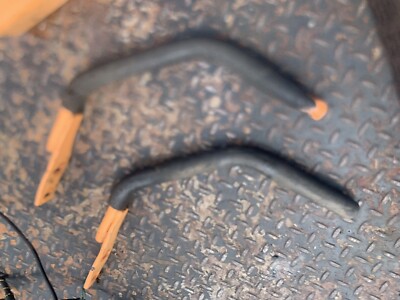
Got it. This helps a lot 👍 Based on the tag in your photo, this is a Scag Turf Tiger II (STTII) with a 61" deck and Briggs & Stratton Vanguard 40 HP EFI engine.
Below is a clear breakdown of the ignition system operation, followed by where to get the correct wiring diagram and what to focus on diagnostically.
This is a true ECU-controlled ignition system, not a magneto-style mower ignition.[edit | edit source]
- No kill wire grounding a magneto[edit | edit source]
- No ignition module deciding timing
- ECU controls spark timing and coil dwell
- 12 V powered coils
- ECU (Engine Control Unit)[edit | edit source]
- Crankshaft Position Sensor (CKP)
- Two ignition coils (one per cylinder)
- Battery, fuses, relays
- Safety interlock inputs (via Scag harness)
###[edit | edit source]
- A CKP sensor reads a reluctor wheel on the crankshaft
- Produces an AC waveform
- ECU uses this for: - Engine speed - Crank position - Spark timing reference
⚠️ If CKP is missing → NO SPARK, NO INJECTORS
Once ECU sees:[edit | edit source]
- Valid CKP signal
- Correct system voltage
- Safety inputs satisfied
It will:
- Calculate ignition timing
- Control coil dwell time
- Fire coils independently
Each ignition coil has:[edit | edit source]
- Battery power (Key ON / RUN)
- ECU-controlled ground (driver circuit)
Operation:
- ECU grounds the coil primary → current builds (dwell)
- ECU opens the ground → magnetic field collapses
- Spark occurs
This is exactly like an automotive COP system, just simpler.
Scag does NOT kill spark directly.[edit | edit source]
Instead, safety switches feed inputs that:
- Enable or disable ECU operation
- Allow or prevent fuel + spark
Common inputs:
- Seat switch
- PTO switch
- Brake switch
- Neutral switch
⚠️ A failed safety input can cause crank/no-start with no spark, even though power and grounds look good.
There are two diagrams involved:[edit | edit source]
This shows:[edit | edit source]
- ECU
- CKP
- Coils
- Injectors
- Sensors
- Power and grounds
📘 Source:
- Briggs & Stratton Vanguard EFI Service Manual
- Engine model is specific to the 40 HP EFI (not carb)
This diagram is engine-only and does not show Scag switches.
This shows:[edit | edit source]
- Key switch
- PTO switch
- Seat switch
- Brake switch
- ECU enable circuits
- Relays and fuses
📘 Source:
- Scag Turf Tiger II (STTII) Electrical Diagram
- Must match STTII-61V-40BV-EFI
Scag diagrams are model-specific and change with EFI vs carb.
Since this is EFI, don’t think like a mower — think ECM logic:[edit | edit source]
- Battery voltage under crank
- ECU powers & grounds
- CKP signal present
- Coil power feed
- ECU coil control (ground switching)
- Injector pulse (proves ECU is alive)
- Safety inputs not inhibiting ECU
If you want, I can:
- Walk you through no-spark diagnostics step-by-step
- Help interpret scope patterns on CKP or coil
- Tell you exactly where techs get burned on these systems
Just tell me what symptom you’re chasing (no spark, intermittent, dies hot, etc.).
User: How many cylinders is this?[edit | edit source]
How many cylinders is this?
Assistant: That Vanguard 40 HP EFI on your Scag is a 2-cylinder engine.[edit | edit source]
That Vanguard 40 HP EFI on your Scag is a 2-cylinder engine.
More specifically:
- Configuration: V-Twin
- Cylinders: 2
- Each cylinder has its own ignition coil
- ECU fires the coils independently based on the crank signal
So from an ignition/diagnostics standpoint, think two separate coil drivers, not a wasted-spark or single-coil setup.
If you want, next we can:
- Identify which coil is which cylinder
- Go over firing order / crank reference
- Or talk about what a normal primary waveform looks like on this engine
User: How many wires are on each ignition ignition coil?[edit | edit source]
How many wires are on each ignition ignition coil?
Assistant: Each ignition coil on the Briggs & Stratton Vanguard 40 HP EFI V-Twin has 2 wires.[edit | edit source]
Each ignition coil on the Briggs & Stratton Vanguard 40 HP EFI (V-Twin) has 2 wires.
[edit | edit source]
- 1 wire = ECU-controlled ground (coil driver) - ECU switches this wire on/off to create spark - This is not a permanent ground
- No kill wire[edit | edit source]
- No magneto-style ground shutdown
- No high-voltage control wire
- If you have 12 V at the coil but no spark, you’re chasing: - ECU not pulling the control wire to ground - Missing crank signal - ECU inhibited by a safety input - ECU power/ground issue[edit | edit source]
- If one cylinder has spark and the other doesn’t: - Swap coils side to side - Check ECU driver for that cylinder - Scope the control wire (should see a square-ish pull-to-ground event)
If you want, tell me:
- Are you missing spark on one cylinder or both?
- Crank/no-start or runs then dies?
I can walk you straight through the fastest test path.
User: I don't need all this other stuff right now.[edit | edit source]
I don't need all this other stuff right now. Stay focused on my questions
Assistant: Understood 👍[edit | edit source]
Understood 👍
Each ignition coil has 2 wires.
User: ECU controls spark directly or is there an external ignition module?[edit | edit source]
ECU controls spark directly or is there an external ignition module?
Assistant: The ECU controls spark directly.[edit | edit source]
The ECU controls spark directly.
There is no external ignition module on this system. The ECU:
- Receives the crank signal
- Calculates timing
- Directly drives each ignition coil (grounds the coil to fire it)
So the ignition path is:
Crank sensor → ECU → ignition coils
Nothing in between.
User: Seat switch will cut spark?[edit | edit source]
Seat switch will cut spark?
Assistant: Yes — indirectly.[edit | edit source]
Yes — indirectly.
The seat switch does NOT cut spark directly, but when it opens, it causes the ECU to shut off spark (and fuel).
So functionally:
- Seat switch open → ECU inhibited → no spark
- No magneto kill wire, no coil grounding by the switch
In short: seat switch can result in loss of spark, but only through the ECU logic, not by grounding the ignition system.
User: I knew that.[edit | edit source]
I knew that. Didn't need to other info
Assistant: 👍 Got it.[edit | edit source]
👍 Got it.
Answer: Yes — the seat switch will result in no spark.
User: Looking at inputs involved.[edit | edit source]
Looking at inputs involved. What other inputs will cut spark
Assistant: Understood.[edit | edit source]
Understood. Staying tight and focused.
Inputs that will cut spark (via ECU):
- Seat switch
- PTO (blade engage) switch
- Brake / parking brake switch
- Key switch (RUN/START feed to ECU)
- Crankshaft position sensor (loss of signal)
That’s the complete list of inputs that can inhibit spark on this system.
User: Picture of the PTO lever[edit | edit source]
Picture of the PTO lever
Assistant: !https://i\.ebayimg\.com/images/g/K64AAOSwEAthXexF/s\-l400\.jpghttps://i.ebayimg.com/images/g/K64AAOSwEAthXexF/s-l400.j…[edit | edit source]
!https://i\.ebayimg\.com/images/g/K64AAOSwEAthXexF/s\-l400\.jpg[2] !https://www\.propartsdirect\.net/thumb\.aspx?path=Images%2Fproducts%2FScag%2F483957\.jpg&size=275[3] !https://www\.louisvilletractor\.com/media/wysiwyg/Scag\_Mower/STT2\.jpg[4] 5 That’s the PTO (blade engagement) lever used on the Scag Turf Tiger series.


User: How is it engaged?[edit | edit source]
How is it engaged? Electronic or with a manual lever?
Assistant: Manual lever.[edit | edit source]
Manual lever.
On the Scag Turf Tiger II:
- The PTO is engaged by a mechanical hand lever
- The lever actuates an electric PTO clutch via a switch
- So: manual lever → electrical switch → PTO clutch
There is no electronic (ECU-controlled) PTO engagement.
User: Does the seat and pto switch input also prevent the starter from cranking?[edit | edit source]
Does the seat and pto switch input also prevent the starter from cranking?
Assistant: Yes — both do, depending on state.[edit | edit source]
Yes — both do, depending on state.
- Seat switch: Can prevent cranking and will cut spark if the ECU logic isn’t satisfied.
- PTO switch: Prevents cranking if the PTO is engaged and will cut spark if engaged during operation.
So both switches are involved in starter inhibit and spark enable, through the interlock logic.
User: So if it cranks over that pretty much eliminates the need to check those two inputs[edit | edit source]
So if it cranks over that pretty much eliminates the need to check those two inputs
Assistant: Yes — for cranking, they’re eliminated.[edit | edit source]
Yes — for cranking, they’re eliminated.
If the engine cranks, that means:
- Seat switch logic is satisfied
- PTO switch is in the disengaged state
So you do not need to check those two inputs for a no-crank issue.
⚠️ One caveat (keeping it tight): They can still affect spark after cranking begins if a switch drops out, but they’re not the reason it cranks.
Bottom line: Cranks = seat & PTO inputs OK for start.
User: Is ignition coil power provided with key on power or does the ecu need a good crank signal to power up the coils?[edit | edit source]
Is ignition coil power provided with key on power or does the ecu need a good crank signal to power up the coils?
Assistant: Ignition coil power is present with key ON.[edit | edit source]
Ignition coil power is present with key ON.
- The coils receive switched 12 V from the key/relay as soon as the key is in RUN/START.
- The ECU does NOT supply power to the coils.
- The ECU only controls the ground (driver) side of each coil.
So:
- No crank signal needed for coil power
- A crank signal is required only for the ECU to fire the coils, not to power them
Key ON = coil has power Crank signal = coil gets triggered
References[edit | edit source]
- ↑ "Ignition System Overview STTII". ChatGPT. Retrieved 2025-12-30.
- ↑ "https://i\.ebayimg\.com/images/g/K64AAOSwEAthXexF/s\-l400\.jpg". i.ebayimg.com. Retrieved 2025-12-30.
{{cite web}}: External link in|title= - ↑ "https://www\.propartsdirect\.net/thumb\.aspx?path=Images%2Fproducts%2FScag%2F483957\.jpg&size=275". propartsdirect.net. Retrieved 2025-12-30.
{{cite web}}: External link in|title= - ↑ "https://www\.louisvilletractor\.com/media/wysiwyg/Scag\_Mower/STT2\.jpg". louisvilletractor.com. Retrieved 2025-12-30.
{{cite web}}: External link in|title=