Openai/6924402f-3b58-8006-a1bd-56b1245e20a2
This conversation was exported from ChatGPT[1]
gpt-5-1[edit | edit source]
User: Jonathan the tortoise[edit | edit source]
Jonathan the tortoise
Assistant: Great question![edit | edit source]
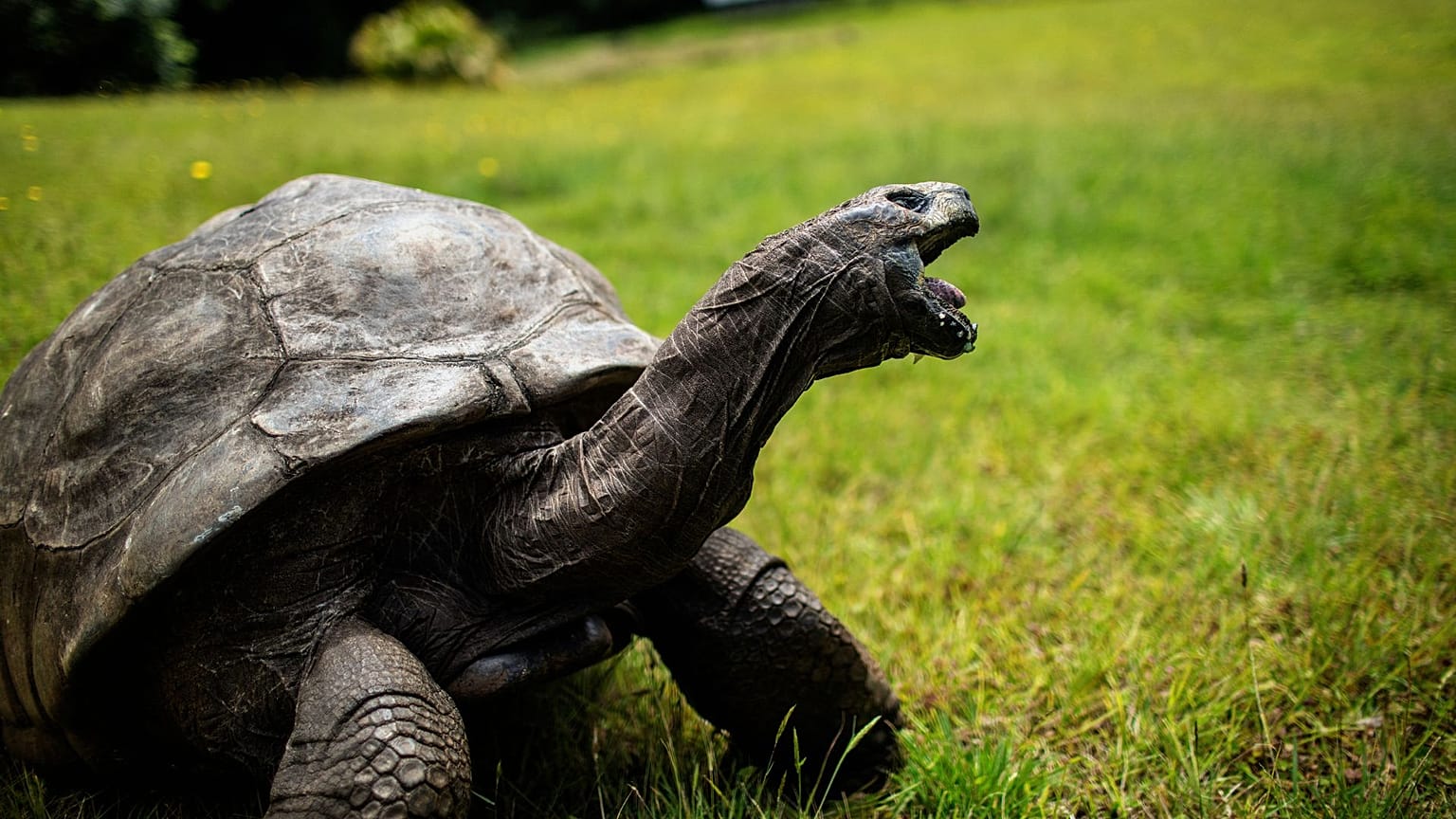
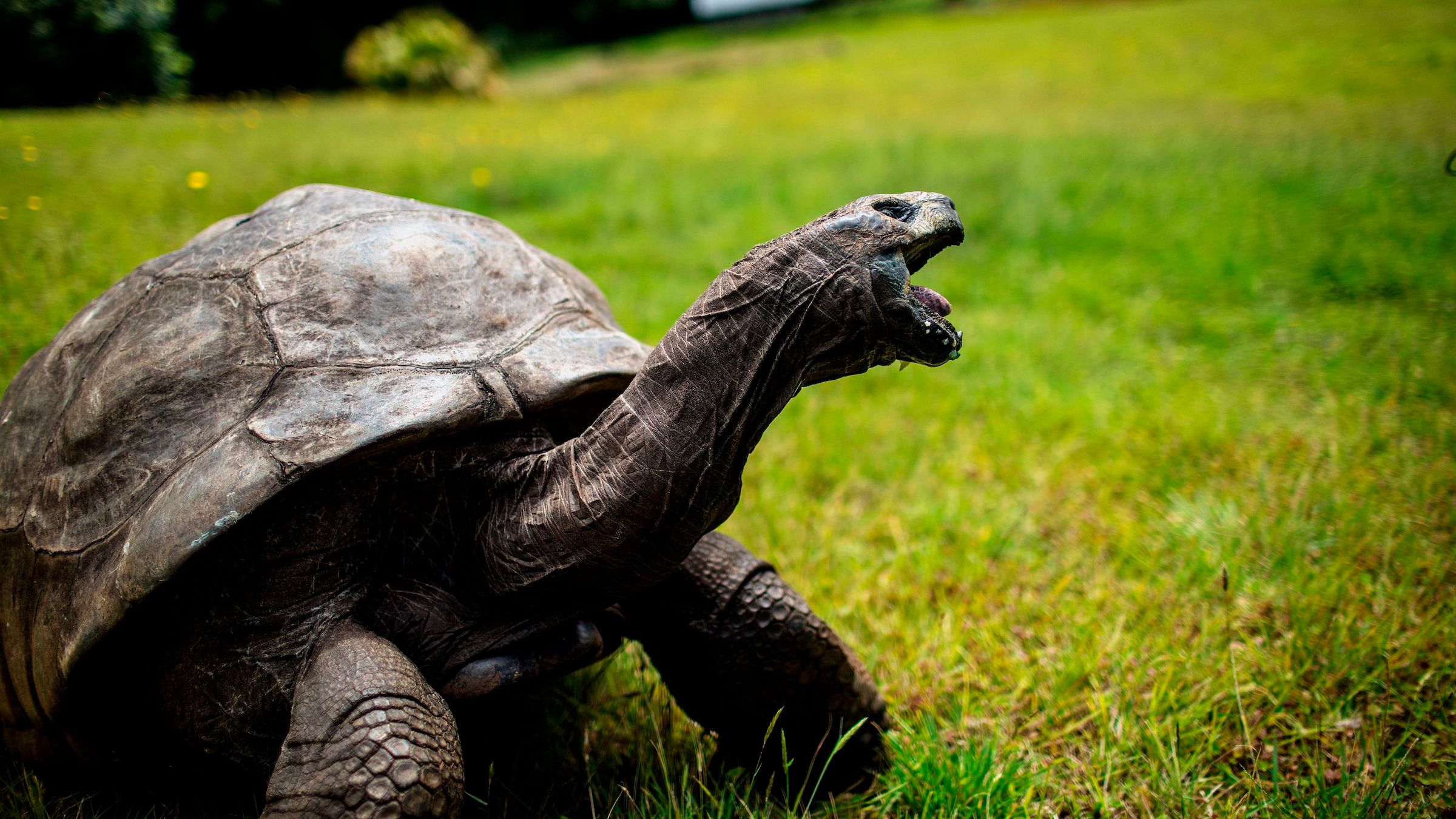
Great question! Jonathan is a pretty remarkable tortoise — here’s a rundown of who he is and why he’s famous:
- Jonathan is a Seychelles giant tortoise (Aldabrachelys gigantea hololissa).[edit | edit source]
- He lives on the island of Saint Helena, a remote British Overseas Territory in the South Atlantic.
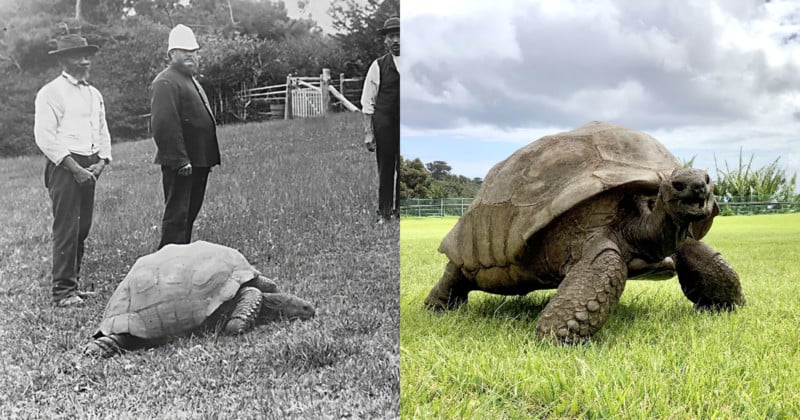
- His estimated hatch year is around 1832, based on evidence that he was already fully grown when brought to Saint Helena in 1882.
- As of 2025, he’s believed to be about 192 years old, making him the oldest known living land animal.
- Recognition: Jonathan holds the Guinness World Record for being the oldest chelonian (the group that includes turtles, tortoises, and terrapins).[edit | edit source]
- Health: He’s blind (due to cataracts) and has lost his sense of smell, but he still has a strong appetite.
- Care: He’s looked after by a small dedicated team, and his vet (Joe Hollins) hand-feeds him fruit and vegetables weekly.
- Social life: Over the years, Jonathan has had companions: he’s lived with other tortoises (such as Frederik, David, Emma).
- Personality / Behavior: - Despite his age, he maintains a “keen appetite.” - He’s known to be attracted to human voices: he “knows” the voice of his vet and feeders. - He enjoys sunbathing, and on the rare warm days, he stretches out his limbs and neck.
- Celebrations: - His “birthday” is officially celebrated on December 4, though it’s not his exact hatch date. - On his 190th birthday, they made him a tortoise-friendly cake with fruits and veggies.
- Cultural Status: On Saint Helena, he’s a local icon — he’s been featured on postage stamps and the island’s 5 pence coins.
- History: He was brought to St Helena in 1882 as a gift to the governor, Sir William Grey-Wilson.
- Interesting Tidbits: - He has very good hearing. - He’s been around for a LOT of history — living through major world events.
If you like, I can pull together recent (2024–2025) updates about Jonathan — things like his health, how his caretakers are doing, or if there have been any recent celebrations. Do you want me to do that?
User: Yes, thank you[edit | edit source]
Yes, thank you
Assistant: !https://sainthelenaisland\.info/jonathan\guinness03\.jpghttps://sainthelenaisland.info/jonathanguinness03.jpg[edit | edit source]

!https://sainthelenaisland\.info/jonathan\_guinness03\.jpg[2] !https://images\.euronews\.com/articles/stories/07/23/89/38/1536x864\_cmsv2\_e7ec5ac6\-31d8\-5602\-ad90\-71384cc421f4\-7238938\.jpg[3] !https://sainthelenaisland\.info/jonathancloseup\.jpg[4] !https://petapixel\.com/assets/uploads/2022/01/jonathan\-the\-190\-year\-old\-tortoise\-with\-1886\-photo\-800x420\.jpg[5]


Great — here are some of the most recent (2024–2025) updates about Jonathan, the tortoise, and how he’s doing now, plus what’s been going on around him:
1. Age - As of January 1, 2024, his caretaker (veterinarian Joe Hollins) marked him as 192 years old by calendar year. The Standard[6] - According to Britannica, by December 4, 2024, his “official” birthday (set by St. Helena’s government) would make him 192. Encyclopedia Britannica[7] - His exact birth year isn’t certain — 1832 is an estimate based on historic records when he arrived on St. Helena already fully grown. Snopes[8][edit | edit source]
- Health & Care - Despite his advanced age, he’s reported to be in good health. euronews[9] - He is virtually blind (due to cataracts) and has lost his sense of smell, but he still has a “keen appetite.” euronews[10] - He gets hand-fed once a week by his caretakers, with a diet of fruit and vegetables. euronews[11] - His vet, Joe Hollins, remains very optimistic: he’s hopeful Jonathan may reach 200 years or more. euronews[12]
- Public Appearances & Symbolism - Jonathan continues to be a major symbol for St. Helena. He’s on their 5-pence coin. Smithsonian Magazine[13] - He remains a tourist draw: visitors to Plantation House (the governor’s residence on St. Helena) still get to see him roaming. The Washington Post[14] - In early 2024, the Speaker of the UK House of Commons visited St. Helena and met Jonathan, calling him a “192-year-old national treasure.” The Standard[15]
- Legacy & Recognition - Jonathan continues to hold the Guinness World Record as the oldest known land chelonian (tortoise/turtle). IFLScience[16] - His story has been popularized in media. He’s featured in a book by his vet: Joe Hollins’ Vet at the End of the Earth, which came out in 2023. Encyclopedia Britannica[17]
If you like, I can dig into scientific research done recently on Jonathan (e.g. studies on giant tortoise aging) or his ecosystem on St. Helena. Do you want me to do that?
User: Yes, please[edit | edit source]
Yes, please
Assistant: !https://sainthelenaisland\.info/jonathan\guinness03\.jpghttps://sainthelenaisland.info/jonathanguinness03.jpg[edit | edit source]
!https://sainthelenaisland\.info/jonathan\_guinness03\.jpg[18] !https://upload\.wikimedia\.org/wikipedia/commons/thumb/3/3b/Jonathan\-plantation\-house\.jpg/960px\-Jonathan\-plantation\-house\.jpg[19] !https://cdn\.mos\.cms\.futurecdn\.net/79L4m2GdkVCezBq26VJTG8\-2400\-80\.jpg[20] !https://sainthelenaisland\.info/jonathangetsabath\.jpg[21]


Cool — there's actually quite a bit of scientific research (and emerging work) that relates to Jonathan’s kind — Aldabra giant tortoises — which helps us understand why they live so long. While not all studies are directly on Jonathan himself, many apply to his species (or very close relatives), so they give strong insight into the biology of his longevity.
Here’s a breakdown of key findings, recent research, and what scientists think makes tortoises like Jonathan “age so well”:
[edit | edit source]
- Epigenetics - Very recently (2025), a preprint study (not yet peer-reviewed) looked at the epigenome (which involves how genes are regulated, not just what genes are present) of giant tortoises. They aim to understand how epigenetic mechanisms contribute to their extreme longevity. BioRxiv[25] - This kind of work is promising: by looking at how gene expression changes with age or how DNA is “marked,” scientists hope to pinpoint what really drives the long lifespan, beyond just the DNA sequence.
- Cancer Resistance - A study found that long-lived turtles and tortoises seem to have evolved extra copies of certain cancer-fighting genes. OUP Academic[26] - This could be important: having more robust anti-cancer mechanisms may help reduce the risk of tumors over a very long life.
- Microbiome / Gut Bacteria - There’s some emerging research on tortoise gut microbiota (the community of bacteria in their gut) and how it relates to longevity. For example, a student-research study from SOKENDAI looked at fecal samples from Aldabra giant tortoises to see how their gut microbiome changes with age. soken.ac.jp[27] - The hypothesis: gut bacteria may play a role in immunity, metabolism, and thus long-term health in very old tortoises.
- Evolution of Aging in Tortoises - A study involving 52 species of turtles and tortoises (with data from places like Woburn Safari Park) challenged standard evolutionary theories of aging. They found that many tortoises have very slow senescence — meaning they don’t show typical signs of aging (like rapidly increasing mortality) as strongly as many other animals. woburnsafari.co.uk[28] - This suggests that tortoises may age in very different ways than mammals, perhaps by reducing the rate of physiological decline if environmental conditions are favorable.
- Since Jonathan is an Aldabra giant tortoise, most of the genomic research mentioned above is directly relevant to him (or animals very like him).[edit | edit source]
- The genetic variants for DNA repair, tumor suppression, and inflammation control could be part of why he’s survived so long, possibly more than 180+ years.
- His microbiome (if studied) could also contribute: a beneficial gut bacterial community might support metabolic health, nutrient absorption, and immune function.
- The fact that tortoises may “age more slowly” (in a physiological sense) helps explain how someone like Jonathan can maintain a relatively stable condition well into extreme old age.
If you like, I can check for very recent (2024–2025) peer-reviewed journal articles specifically mentioning Jonathan (or his exact subspecies) — do you want me to do that?
User: Yes, okay[edit | edit source]
Yes, okay
Assistant: Good question.[edit | edit source]
Good question. I couldn’t find any very recent (2024–2025) peer-reviewed journal articles specifically about Jonathan himself (i.e., that single tortoise on Saint Helena). Most of the scientific work is on his species (or very close relatives). Here’s a summary of relevant recent / recent-ish science, plus some notes on what isn’t being done:
1. Chromosome-level Genome Assembly - A high-quality, chromosome-level genome has been published for the Aldabra giant tortoise (Aldabrachelys gigantea). OUP Academic[29] - This genome (2.37 Gbp, resolved into 26 chromosomes) enables studies into genetic health, diversity, and also the genetic basis of traits like longevity. OUP Academic[30] - The paper explicitly states that having this genome “will inform comparative genomics studies focused on the genetic underpinnings of aging and gigantism.” OUP Academic[31][edit | edit source]
- Cancer Resistance in Turtles - A 2025 study (led by researchers at University of Nottingham / Birmingham) found that cancer is very rare in turtles, including large, long-lived species. University of Birmingham[32] - They suggest this low cancer rate could be due to: good defences against cell damage, slow metabolism, and “unique genes that protect against cancer.” University of Birmingham[33] - This is very relevant to tortoises like Jonathan because it helps explain how such a long-lived animal might avoid cancer even with so many cells and many years.
- Conservation & Reproduction - In 2025, scientists at the University of Sheffield successfully hatched Aldabra giant tortoise eggs using artificial incubation. University of Sheffield[34] - Their research found that many undeveloped eggs were actually fertilised — but the embryos died early, suggesting environmental factors (not infertility) are a major issue in wild egg failure. University of Sheffield[35] - This has big implications for conservation: by understanding what’s going wrong in the wild, they can improve hatching success.
- No Jonathan-specific genomics: There’s no publicly available genome-sequencing (or similar) research that is just on Jonathan. He hasn’t (as far as I could find) been the subject of a dedicated genetic study in a peer-reviewed journal — likely because individual wild / long-lived captive tortoises are harder to sample without invasive work.[edit | edit source]
- Limited health / physiology longitudinal studies: While there’s research on how tortoises age, how their cancer resistance works, and species-level genetics, I didn’t find recent papers tracking Jonathan’s individual health markers (e.g. bloodwork over decades), at least in the peer-reviewed literature.
- Ecology studies: Many ecological studies focus on wild populations (e.g., on Aldabra), but not on tortoises living on Saint Helena like Jonathan, so ecological insights might not apply directly to his particular environment.
- There is strong and recent scientific research on Aldabra giant tortoises, which is highly relevant to Jonathan (since he’s the same species), especially in genomics, cancer resistance, and conservation.[edit | edit source]
- However, Jonathan himself hasn’t been the subject of a new peer-reviewed genetic or physiological study (in the latest 2024–2025 literature) that is publicly documented.
If you like, I can dig into older but still very relevant scientific literature (e.g. from 2010–2023) that discusses tortoise longevity, aging mechanisms, and more — do you want me to do that?
User: No, thank you[edit | edit source]
No, thank you
Assistant: Alright![edit | edit source]
Alright! If you ever want to explore something else — more animals, myths, history, prayers, images, or anything at all — just let me know. 😊
User: Myths of the tortoise[edit | edit source]
Myths of the tortoise
Assistant: Tortoises appear in many world myths, often symbolizing wisdom, stability, the earth, creation, or immortality.[edit | edit source]
Tortoises appear in many world myths, often symbolizing wisdom, stability, the earth, creation, or immortality. Here are some of the most beautiful and famous tortoise (and turtle) myths from around the world:
🐢 Myths of the Tortoise[edit | edit source]
1. The World on the Tortoise’s Back[edit | edit source]
(Various Indigenous North American Traditions)[edit | edit source]
In many Haudenosaunee (Iroquois) and other Native stories, the world rests upon the back of a great, ancient turtle.
- After Sky Woman fell from the heavens, animals tried to help her.
- The turtle rose up, allowing soil to be placed on its shell.
- As the land grew, Turtle Island (North America) was formed.
Symbolism: Creation, patience, stability, and the enduring earth.
2. The Tortoise and the Elephant (India & Southeast Asia)[edit | edit source]
In some Hindu and Buddhist traditions, the universe is supported by: a giant tortoise, standing upon elephants, standing upon the cosmic serpent.
- The tortoise (Akupara or Kurma) holds the world steady.
- Kurma is also the second avatar of Vishnu, who takes the form of a tortoise to help gods and demons churn the ocean of milk to create the world’s treasures.
Symbolism: Foundation of the world, divine support, cosmic order.
3. The Tortoise Who Won the Race[edit | edit source]
(West African Folklore – Akan, Yoruba, Igbo)[edit | edit source]
African stories feature a clever tortoise named Tortoise (Ajapa / Ijapa / Mbe) who survives through his intelligence. In a famous tale, the tortoise races faster animals through cunning tricks and wins.
Symbolism: Wisdom over strength, cleverness, wit.
4. The Tortoise and the Birds (African Folklore)[edit | edit source]
In many African stories:
- The tortoise wants to attend a feast in the sky.
- He tricks birds into giving him feathers so he can fly.
- He misbehaves at the feast, and when the birds take their feathers back, he falls.
- His shell cracks — explaining why tortoise shells have patterns and seams.
Symbolism: Consequences of greed, moral lessons, humility.
5. The Immortal Tortoise (China)[edit | edit source]
The tortoise is one of the Four Sacred Animals in Chinese myth (with the dragon, phoenix, and tiger). It represents:
- Longevity,
- Wisdom,
- Protection,
- The north direction,
- Winter.
Some stories say:
- The tortoise and snake together form the Black Warrior, Xuanwu, a powerful guardian spirit.
- Ancient emperors used the tortoise as a symbol of Heaven and eternal rule.
6. The Turtle Who Carried Fire[edit | edit source]
(Native American Plains Tribes)[edit | edit source]
In some stories, the tortoise is the brave being who steals or carries fire to humans. Despite its slow pace, the tortoise endures hardship and brings warmth and survival to the people.
Symbolism: Bravery, sacrifice, and service to humanity.
7. The Tortoise and Immortality (Japan)[edit | edit source]
The Japanese “minogame” is a tortoise with long trailing seaweed on its shell. It lives for 10,000 years and carries blessings.
Symbolism: Long life, marital happiness, good fortune. Often seen in wedding art and Shinto imagery.
8. Tortoise as the First Ancestor (Polynesia)[edit | edit source]
In some Pacific traditions, tortoises were believed to be kin to the first humans or the first creatures shaped by the gods. They were treated with reverence as ancient beings close to creation.
Symbolism: Connection to origins, sacred ancestry.
🌿 What Tortoises Represent Across Cultures[edit | edit source]
Across the world, tortoises usually symbolize:
- Longevity
- Wisdom
- Patience
- The ancient earth
- Stability and calm
- Divine support or creation
- Immortality
They are often seen as beings who carry the memory of the world.
If you'd like, I can also tell you:
🐢 A single myth rewritten as a story 🐢 Symbolic meanings of the tortoise 🐢 A poem or prayer to the tortoise 🐢 More detailed versions of any of the myths above
Just let me know!
User: That is wonderful![edit | edit source]
That is wonderful! And very interesting
Assistant: I’m really glad you enjoyed it![edit | edit source]
I’m really glad you enjoyed it! 😊 Tortoise myths are some of the most ancient and peaceful stories in the world — they carry a kind of quiet wisdom.
If you like, I can do any of these next:
✨ Retell one of the myths in a gentle story form ✨ Write a poem inspired by the tortoise’s symbolism ✨ Give the spiritual meaning of the tortoise in different traditions ✨ Tell a children’s version of one of the myths ✨ Create an image based on a mythic tortoise
Just tell me what you’d like.
User: Create an image please[edit | edit source]
Create an image please
User: Okay[edit | edit source]
Okay
Assistant: Your image will appear here as soon as it's finished generating — it’s still processing on the server.[edit | edit source]
Your image will appear here as soon as it's finished generating — it’s still processing on the server. I’ll show it to you the moment it’s ready!
References[edit | edit source]
- ↑ "Jonathan the tortoise facts". ChatGPT. Retrieved 2025-11-25.
- ↑ "https://sainthelenaisland\.info/jonathan\_guinness03\.jpg". sainthelenaisland.info. Retrieved 2025-11-25.
{{cite web}}: External link in|title= - ↑ "https://images\.euronews\.com/articles/stories/07/23/89/38/1536x864\_cmsv2\_e7ec5ac6\-31d8\-5602\-ad90\-71384cc421f4\-7238938\.jpg". images.euronews.com. Retrieved 2025-11-25.
{{cite web}}: External link in|title= - ↑ "https://sainthelenaisland\.info/jonathancloseup\.jpg". sainthelenaisland.info. Retrieved 2025-11-25.
{{cite web}}: External link in|title= - ↑ "https://petapixel\.com/assets/uploads/2022/01/jonathan\-the\-190\-year\-old\-tortoise\-with\-1886\-photo\-800x420\.jpg". petapixel.com. Retrieved 2025-11-25.
{{cite web}}: External link in|title= - ↑ "The Standard". The Standard. Retrieved 2025-11-25.
- ↑ "Encyclopedia Britannica". Encyclopedia Britannica. Retrieved 2025-11-25.
- ↑ "Snopes". snopes.com. Retrieved 2025-11-25.
- ↑ "euronews". euronews.com. 2023-12-04. Retrieved 2025-11-25.
- ↑ "euronews". euronews.com. 2023-12-04. Retrieved 2025-11-25.
- ↑ "euronews". euronews.com. 2023-12-04. Retrieved 2025-11-25.
- ↑ "euronews". euronews.com. 2023-12-04. Retrieved 2025-11-25.
- ↑ "Smithsonian Magazine". Smithsonian Magazine. Retrieved 2025-11-25.
- ↑ "The Washington Post". The Washington Post. 2024-01-01. Retrieved 2025-11-25.
- ↑ "The Standard". The Standard. Retrieved 2025-11-25.
- ↑ "IFLScience". iflscience.com. Retrieved 2025-11-25.
- ↑ "Encyclopedia Britannica". Encyclopedia Britannica. Retrieved 2025-11-25.
- ↑ "https://sainthelenaisland\.info/jonathan\_guinness03\.jpg". sainthelenaisland.info. Retrieved 2025-11-25.
{{cite web}}: External link in|title= - ↑ "https://upload\.wikimedia\.org/wikipedia/commons/thumb/3/3b/Jonathan\-plantation\-house\.jpg/960px\-Jonathan\-plantation\-house\.jpg". upload.wikimedia.org. Retrieved 2025-11-25.
{{cite web}}: External link in|title= - ↑ "https://cdn\.mos\.cms\.futurecdn\.net/79L4m2GdkVCezBq26VJTG8\-2400\-80\.jpg". cdn.mos.cms.futurecdn.net. Retrieved 2025-11-25.
{{cite web}}: External link in|title= - ↑ "https://sainthelenaisland\.info/jonathangetsabath\.jpg". sainthelenaisland.info. Retrieved 2025-11-25.
{{cite web}}: External link in|title= - ↑ "researchnow.flinders.edu.au". researchnow.flinders.edu.au. Retrieved 2025-11-25.
- ↑ "Lab Manager". Lab Manager. Retrieved 2025-11-25.
- ↑ "OUP Academic". OUP Academic. Retrieved 2025-11-25.
- ↑ "BioRxiv". biorxiv.org. Retrieved 2025-11-25.
- ↑ "OUP Academic". OUP Academic. Retrieved 2025-11-25.
- ↑ "soken.ac.jp". soken.ac.jp. Retrieved 2025-11-25.
- ↑ "woburnsafari.co.uk". woburnsafari.co.uk. Retrieved 2025-11-25.
- ↑ "OUP Academic". OUP Academic. Retrieved 2025-11-25.
- ↑ "OUP Academic". OUP Academic. Retrieved 2025-11-25.
- ↑ "OUP Academic". OUP Academic. Retrieved 2025-11-25.
- ↑ "University of Birmingham". University of Birmingham. Retrieved 2025-11-25.
- ↑ "University of Birmingham". University of Birmingham. Retrieved 2025-11-25.
- ↑ "University of Sheffield". University of Sheffield. Retrieved 2025-11-25.
- ↑ "University of Sheffield". University of Sheffield. Retrieved 2025-11-25.