Openai/69606181-ab0c-8001-96cc-1653bd658833
This conversation was exported from ChatGPT[1]
gpt-5-2[edit | edit source]
User: P0087 fault code[edit | edit source]
P0087 fault code
Assistant: P0087 is a Fuel Rail/System Pressure Too Low fault code.[edit | edit source]
P0087 is a Fuel Rail/System Pressure Too Low fault code. In plain terms: the engine isn’t getting enough fuel pressure compared to what the ECU expects.
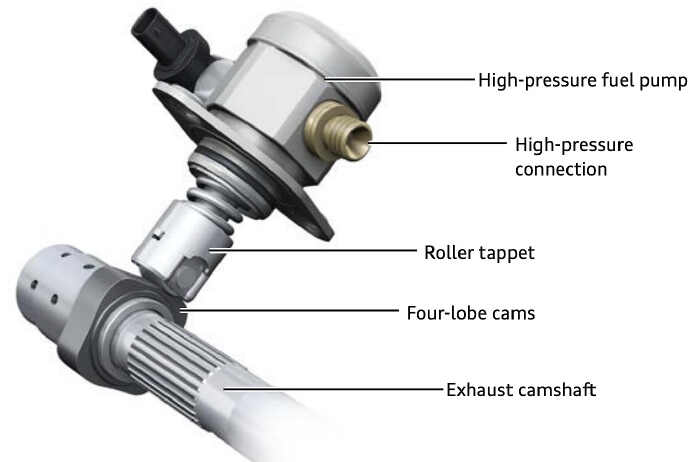
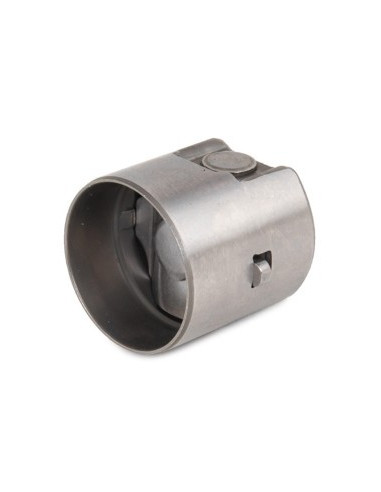
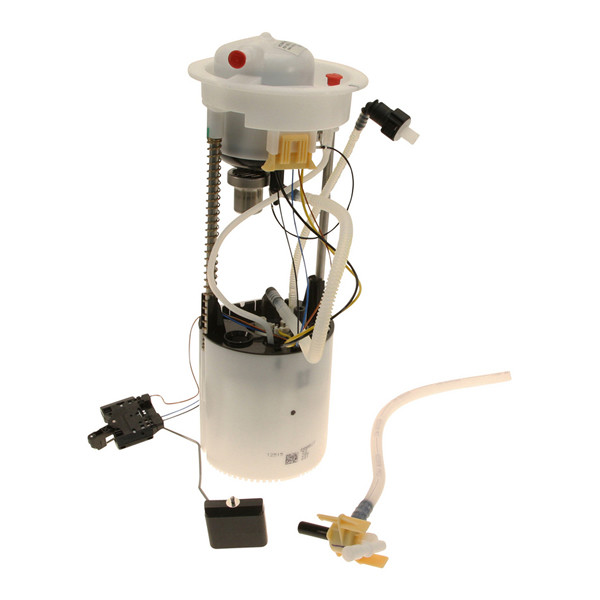
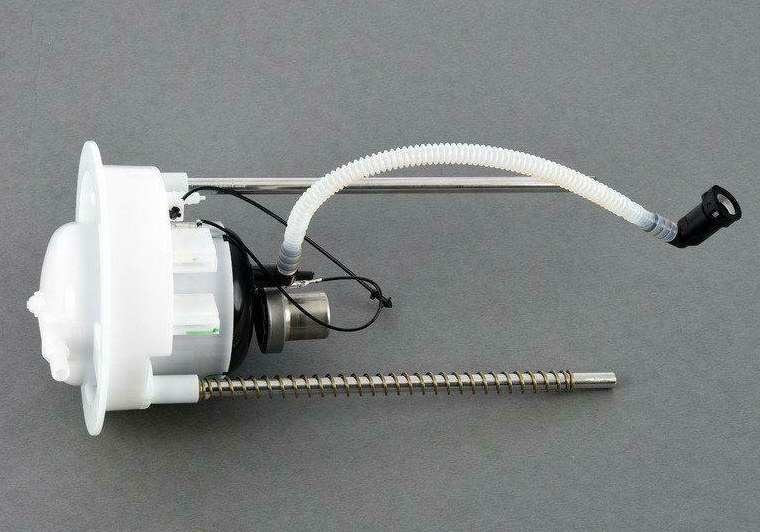
!https://cdn11\.bigcommerce\.com/s\-m32opxf6o2/images/stencil/original/products/10781/813483/12686809\_media\_01\_\_70584\.1764615810\.jpg?c=1[2] !https://marvel\-b1\-cdn\.bc0a\.com/f00000000270532/www\.underhoodservice\.com/wp\-content/uploads/2022/11/Fuel\-Pump\.jpg[3] !https://m\.media\-amazon\.com/images/I/71Ka1FYzsiL\.jpg[4] 4


The ECU monitors fuel pressure via the fuel rail pressure sensor. If actual pressure stays below target for a certain time/load condition, it throws P0087.[edit | edit source]
This usually shows up under:
- Acceleration
- High load
- Cold start
- Hard driving / towing
- Loss of power (especially under load)[edit | edit source]
- Hard starts or extended cranking
- Rough idle or stalling
- Limp mode
- Check Engine Light
- Poor fuel economy
###[edit | edit source]
- Low-pressure pump (in-tank) or
- High-pressure pump (direct injection engines)
- Very common if the filter is overdue[edit | edit source]
- Can cause intermittent pressure drops
- Stuck open → pressure bleeds off[edit | edit source]
- Electronic regulators can fail silently
- Sending bad data → ECU thinks pressure is low[edit | edit source]
- Often sets P0087 + related pressure codes
- Restricted fuel line[edit | edit source]
- Kinked hose
- Bad fuel (water/contamination)
- Low fuel level (yes, this can matter)
- Pump relay[edit | edit source]
- Wiring voltage drop
- Corroded ground
If you want to be efficient and not throw parts at it:[edit | edit source]
- What RPM?[edit | edit source]
- Load?
- Speed?
- Fuel pressure commanded vs actual
- Mechanical gauge (low-pressure side)[edit | edit source]
- Scan tool live data (rail pressure)
- Compare idle vs acceleration
- Fuel filter age[edit | edit source]
- Fuel level
- Listen for pump priming
- Check for fuel leaks
- Voltage at fuel pump under load[edit | edit source]
- Ground integrity
- Pump relay operation
- Does pressure reading make sense when key-on?[edit | edit source]
- Any sudden drops or flat-lined values?
Running lean due to low fuel pressure can:[edit | edit source]
- Overheat pistons
- Damage injectors
- Cause detonation
- Kill catalytic converters
If the car feels gutless under load, don’t push it.
- Fuel filter replacement (cheap, often overlooked)[edit | edit source]
- Fuel pump replacement (most common true fix)
- Fuel pressure sensor (moderate cost)
- Wiring repair near pump or rail
If you want, tell me:[edit | edit source]
- Year / make / model / engine
- Gas or diesel?
- When the code appears (cold start, highway, hard acceleration)
I’ll narrow this down to the most likely single cause for your vehicle instead of generic advice.
User: 2014 Audi Q5 2.0[edit | edit source]
2014 Audi Q5 2.0
Assistant: Got it — 2014 Audi Q5 2.0T EA888, direct injection.[edit | edit source]
Got it — 2014 Audi Q5 2.0T (EA888, direct injection). For this specific platform, P0087 has a very clear “greatest hits” list, and we can narrow it down fast.
!https://strperformance\.com/64179\-large\_default/20\-tsi\-high\-pressure\-cam\-follower\-hydraulic\-pump\-tappet\-fuel\-system\-20\-tfsi\-engine\-ea888\.jpg[5] !https://storage\.googleapis\.com/rp\-production\-public\-content/64o9o0dp56q703i4jgm20xb7yd8c[6] !https://www\.europaparts\.com/media/catalog/product/cache/abf26066ecd46d435ee2486b4a5aee03/8/r/8r0919051n001\.jpg[7] 4


The ECU is seeing fuel rail pressure drop below target, usually under acceleration or load.[edit | edit source]
On this engine, that almost always points to a supply-side issue, not injectors.
###[edit | edit source]
This is the #1 known failure on EA888 engines.
- The HPFP is driven by a cam follower
- When the follower wears: - Pump stroke shortens - Rail pressure drops - ECU throws P0087
- Often happens without noise
- Can cause camshaft damage if ignored
Classic signs
- Loss of power on highway on-ramps
- Hesitation above ~3k RPM
- Code appears only under load
⚠️ If the cam follower hasn’t been inspected/replaced, this should be priority #1
Audi uses a filter + pressure regulator assembly.[edit | edit source]
- Clogs over time
- Starves HPFP
- Very common if filter is original
Interval reality
- Audi says “lifetime”
- Reality: 60–80k miles max
Cheap fix compared to pumps.
- Supplies fuel to the HPFP[edit | edit source]
- Weak pump = HPFP can’t keep up
- Often shows: - Long crank - Pressure drops under load - Sometimes paired with P310B
- Usually sets implausible signal codes[edit | edit source]
- Flatlined or erratic readings
- Not the first thing to replace
- Pump control module[edit | edit source]
- Ground under rear seat
- Relay fatigue
###[edit | edit source]
Look at:
- Specified rail pressure
- Actual rail pressure
- Compare at: - Idle - Steady cruise - Hard acceleration
If actual falls behind target → mechanical issue.
This is fast and decisive.[edit | edit source]
- Remove HPFP (top of engine)
- Inspect follower: - Flat = OK - Dished or punched = problem
- If worn: - Replace follower - Inspect cam lobe - HPFP may also need replacement
If you don’t know when it was last done → replace it.[edit | edit source]
- Verify pressure at idle and load[edit | edit source]
- If low side can’t maintain pressure → pump or module
Continuing to drive with P0087 on this engine can:[edit | edit source]
- Score the intake cam
- Destroy the HPFP
- Lead to $3–5k repair instead of $150–600
This is one of those “small fix now vs big fix later” Audi problems.
1️⃣ Mileage[edit | edit source]
2️⃣ Does it happen only under acceleration or also at idle? 3️⃣ Any other codes (especially P310B, P2293, P0089) 4️⃣ Original fuel pump / filter?
Once I have that, I’ll tell you exactly what to replace first — no parts cannon.
User: 118k miles[edit | edit source]
118k miles
Assistant: At 118k miles on a 2014 Audi Q5 2.0T, P0087 is no longer a “maybe” problem — it’s a known wear-out issue.[edit | edit source]
At 118k miles on a 2014 Audi Q5 2.0T, P0087 is no longer a “maybe” problem — it’s a known wear-out issue. Based on mileage alone, here’s the straight, no-BS answer.
!https://www\.ttforum\.co\.uk/attachments/screenshot\-2022\-10\-29\-at\-16\-19\-14\-png\.493327/[8] !https://image\.made\-in\-china\.com/365f3j00VRyBPuNdynkl/06e127025n\-06e127025q\-High\-Pressure\-Fuel\-Pump\-for\-Audi\-Q5\-2009\-2012\.webp[9] !https://i\.ebayimg\.com/images/g/MLwAAOSwSv1fIKKd/s\-l1200\.png[10]


###[edit | edit source]
At 118k:
- The cam follower is almost certainly worn
- Many fail between 90k–120k
- Once worn, the HPFP cannot build enough rail pressure
- ECU throws P0087 under load
⚠️ This is time-sensitive If the follower punches through, it eats the camshaft → $3k+ repair.
###[edit | edit source]
Pull the HPFP and inspect the cam follower
- Takes ~30–45 minutes
- Very cheap part
- 100% diagnostic certainty
Outcomes:
- Follower worn/dished → Replace follower + likely HPFP
- Follower punched → Stop driving → cam inspection required
Replace the fuel filter (integrated regulator)[edit | edit source]
- Original filters at 118k are usually restricted
- Starves the HPFP
- Common contributor to P0087
Even if it’s not the root cause, it will become one soon.
Test low-pressure in-tank fuel pump[edit | edit source]
- Weak pump = HPFP can’t keep up
- Especially shows up during acceleration
- Often paired with hard starts
❌ Replace injectors[edit | edit source]
❌ Replace the rail pressure sensor first ❌ Ignore the code and “see what happens”
Those are how people turn a $200–600 fix into thousands.
Until this is addressed:[edit | edit source]
- Avoid hard acceleration
- Avoid highway pulls
- Do NOT tow
- If it goes into limp mode → stop pushing it
Lean running on this engine kills parts quietly.
At 118k, this is no longer diagnostic speculation.[edit | edit source]
This is maintenance debt coming due.
If you want, tell me:
- Do you wrench yourself or shop only?
- Any other codes present?
- Does it hesitate mainly above 3k RPM?
I’ll tell you exactly which parts to buy (OEM vs aftermarket, what’s worth upgrading, what isn’t).
User: Just more info[edit | edit source]
Just more info
Assistant: Perfect — that Reddit post actually confirms what I was already leaning toward, and it rules a few things out.[edit | edit source]
Perfect — that Reddit post actually confirms what I was already leaning toward, and it rules a few things out. Let’s tighten this down.
Key takeaways from the “more info”[edit | edit source]
You didn’t just get a random P0087 — you have:
- Confirmed symptoms: misfire, lurching, power loss
- Occurs under load / driving, not just a stored code
- HPFP + LPFP “replaced” by seller (unverified quality/work)
- 500-mile drive before failure → marginal system finally fell below threshold
That combination is textbook EA888 fuel starvation, not a sensor glitch.
Critical clarification (very important)[edit | edit source]
- “I have read about camshaft followers but I’m uncertain if that applies to this motor”
✅ YES — it absolutely applies[edit | edit source]
Your 2014 Q5 2.0T (EA888 Gen 2) DOES use a cam follower.
Audi quietly improved it over earlier versions, but they did NOT eliminate the wear mechanism. At 118k, it is still one of the highest-risk items on the engine.
Why the seller’s “new pumps” don’t clear it[edit | edit source]
This is the trap many people fall into:
Scenario that fits your case perfectly[edit | edit source]
- Original cam follower is worn/dished
- HPFP stroke is reduced
- Seller replaces HPFP + LPFP chasing pressure
- Pressure is better, but still below spec under load
- ECU throws P0087 anyway
- Car feels “okay-ish” until pushed → misfire/lurch
👉 New pumps do NOT fix a worn follower or damaged cam lobe
In fact, a new HPFP on a worn follower accelerates cam damage.
Fuel filter: good move, but…[edit | edit source]
Replacing the fuel filter is necessary maintenance, and yes, a clogged one can cause P0087 — but:
- A filter alone rarely causes misfire + lurching
- A restricted filter usually causes gradual power fade, not sharp hesitation
- At 118k, the filter is likely a contributor, not the root cause
Think of it as removing one choke point — not the main blockage.
The ONE check that matters most right now[edit | edit source]
🔴 Pull the HPFP and inspect the cam follower[edit | edit source]
This is not optional at this point.
What you’re looking for:
- Flat, DLC-coated surface → OK
- Dished center → worn
- Hole or mushrooming → STOP DRIVING (cam inspection)
Why this is urgent If the follower punches through:
- Intake camshaft is usually damaged
- Metal goes into the oil
- Repair cost explodes
This is the fork in the road between:
- $100–600 fix
- $3,000+ engine work
What I strongly suspect (based on everything)[edit | edit source]
Primary: Worn cam follower ± early cam lobe wear Secondary: Old fuel filter worsening the pressure drop Possible but less likely: Aftermarket HPFP not meeting spec
What I’d do if this were my car[edit | edit source]
- Do not drive it hard again
- Replace fuel filter (since it’s already coming)
- Pull HPFP the same day
- Inspect follower before running it further
- Decide next step based on what you see — not guesses
If you want, I can:[edit | edit source]
- Tell you exact torque specs & removal order
- Recommend OEM vs aftermarket follower
- Help you identify cam damage visually
- Advise whether the car is still safe to drive short-term
Just say how deep you want to go. This one’s very solvable — but only if you check the right thing now, not later.
References[edit | edit source]
- ↑ "P0087 Fault Code Explained". ChatGPT. Retrieved 2026-01-09.
- ↑ "https://cdn11\.bigcommerce\.com/s\-m32opxf6o2/images/stencil/original/products/10781/813483/12686809\_media\_01\_\_70584\.1764615810\.jpg?c=1". cdn11.bigcommerce.com. Retrieved 2026-01-09.
{{cite web}}: External link in|title= - ↑ "https://marvel\-b1\-cdn\.bc0a\.com/f00000000270532/www\.underhoodservice\.com/wp\-content/uploads/2022/11/Fuel\-Pump\.jpg". marvel-b1-cdn.bc0a.com. Retrieved 2026-01-09.
{{cite web}}: External link in|title= - ↑ "https://m\.media\-amazon\.com/images/I/71Ka1FYzsiL\.jpg". m.media-amazon.com. Retrieved 2026-01-09.
{{cite web}}: External link in|title= - ↑ "https://strperformance\.com/64179\-large\_default/20\-tsi\-high\-pressure\-cam\-follower\-hydraulic\-pump\-tappet\-fuel\-system\-20\-tfsi\-engine\-ea888\.jpg". strperformance.com. Retrieved 2026-01-09.
{{cite web}}: External link in|title= - ↑ "https://storage\.googleapis\.com/rp\-production\-public\-content/64o9o0dp56q703i4jgm20xb7yd8c". storage.googleapis.com. Retrieved 2026-01-09.
{{cite web}}: External link in|title= - ↑ "https://www\.europaparts\.com/media/catalog/product/cache/abf26066ecd46d435ee2486b4a5aee03/8/r/8r0919051n001\.jpg". europaparts.com. Retrieved 2026-01-09.
{{cite web}}: External link in|title= - ↑ "https://www\.ttforum\.co\.uk/attachments/screenshot\-2022\-10\-29\-at\-16\-19\-14\-png\.493327/". ttforum.co.uk. Retrieved 2026-01-09.
{{cite web}}: External link in|title= - ↑ "https://image\.made\-in\-china\.com/365f3j00VRyBPuNdynkl/06e127025n\-06e127025q\-High\-Pressure\-Fuel\-Pump\-for\-Audi\-Q5\-2009\-2012\.webp". image.made-in-china.com. Retrieved 2026-01-09.
{{cite web}}: External link in|title= - ↑ "https://i\.ebayimg\.com/images/g/MLwAAOSwSv1fIKKd/s\-l1200\.png". i.ebayimg.com. Retrieved 2026-01-09.
{{cite web}}: External link in|title=